Pages

Saturday, 25 October 2025

Nona Hutuktu 诺那呼图克图


Nona Hutuktu (诺那呼图克图)

Introduction
Nona Hutuktu (Chinese: 诺那呼图克图) was a Buddhist lama from the Western Kham / Sichuan region, who became quite famous in China during the 1920s and 1930s. Dr Shen occasionally spoke about him as he was the root master of Madame Wang (Chinese: 王太师母 / Wang Tai Shimu). Madame Wang's maiden name was Chen Guanghuan (Chinese: 陈光幻). She was Professor Yue's Buddhist root master, Professor Yue (Chinese: 乐奂之 Pinyin: Yue Huanzhi) being Dr Shen's main Taijiquan teacher. 

I decided to do a bit of research on Nona Hutuktu and his link to Professor Yue, and here is what I discovered...

Nona Hutuktu was actually a title rather than a name. The Nona part (sometimes written as Nuona), denotes that he was the holder of the 'Nona' lineage. His root master was known in China as Pema Döndrup, the first Nona Hutuktu.

The Hutuktu part of the title is the Chinese pronunciation of the Mongolian honourific: Khutugt (ᠬᠤᠲᠤᠭᠲᠤ). It is derived from the Tibetan word 'tulku' (སྤྲུལ་སྐུ), which is not a title or name, but a word meaning reincarnate Buddha. 

During the time of the Qing dynasty, 'Hutuktu' was more than just a title, it was actually a rank. The Qing government had basically given positions of governance to lamas in Chinese Tibet, systematised into ranks. The Hutuktu rank was a lama who governed a County, and the Nona Hutuktu was governor of Leiqui County (Chinese: 类乌齐, Tibetan: ལས་བུ་ཆེ), in Western Kham.
 
The original Dharma name of our Nona Hutuktu, was Chinlé Gyatso (Tibetan: ན་ལས་རྒྱ་མཚོ་). He was born in May 1864, in Enda County, Sichuan; his mother was Han Chinese, and his father was Tibetan.  He was identified as the reincarnated Buddha of Kala Temple from an early age, taking office at the age of seven, when he was given the Nona title.  As he was already speaking Chinese and Tibetan at that age, he easily learned to read and write in these languages as well as Sanskrit.  He studied the classics of the Nyingma school, and became a senior monk of this school.

Geopolitics 
As Nona Hutuktu held a political office, he became entangled in the unstable geopolitics that snowballed in the wake of the 1911 Chinese revolution. There was an ongoing dispute left-over from the late Qing era, between Tibet and China, over the Western Kham region. Nona had played a pivotal role in leading Sichuan troops to repel the Tibetan troops from Western Kham.

Nona Hutuktu was loyal to the new Chinese government and wanted his region to remain under Chinese control. However, the instability of Chinese military leadership in the aftermath of the revolution offered Tibet an opportunity to regain ground. The Chinese suffered many strategic defeats, and also lost many troops. Nona Hutuktu was eventually captured by the Tibetan and British troops in 1918.

Escape from Imprisonment 
Due to the reverence and respect held for Nona Hutuktu by the people of Western Kham, the Tibetan government wanted him to pledge allegiance, but he refused. Nona was therefore sentenced to life imprisonment.

There are several versions of the story of his escape, here is one of them:

Nona Hutuktu was held in the dungeon of Gushan Castle, under 24 hour guard. He spent his time there meditating and chanting mantra, treating it like a kind of 'dark retreat'.

After more than 5 years in the dungeon, Nona mastered what we might call '5th breath' or 'turtle breathing', which causes the metabolism to slow down so much that the breath and heartbeat can not be detected, somewhat like hibernation. He used the technique to fein death, and, believing that Nona really was dead, the Tibetans entombed him under a bell tower. Over the course of two days, Nona escaped by digging a tunnel with his bare hands.

Nona then travelled by foot through Tibet, Nepal, and India, in the guise of a traveller on a pilgrimage to India. While in Katmandu, he responded to a call to heal one of the daughters of the Nepalese king (King Tribhuvan). The king was so impressed by his daughter's recovery he invited Nona to stay. However, Nona explained that he was on pilgrimage, and so the king rewarded him with clothing and expenses so that he might travel more comfortably.

Eventually, Nona arrived in Mumbai, and from there, he travelled by boat to Shanghai. After arriving in Shanghai, he travelled across land to Beijing, arriving in the autumn of 1925. After overcoming the initial language barriers, he was welcomed at the Tibetan and Mongolian Institute.

Shortly after his arrival in Beijing, Nona Hutuktu was spotted by a (very shocked) Tibetan official. The official sent a photograph of Nona to the Dalai Lama as evidence that Nona Hutuktu was clearly very much alive!


Peace
I believe that Nona's initial aim in travelling to Beijing, was to convince the Chinese government to send troops to Western Kham and regain control of the region. Ultimately, he wanted to bring peace to China and surrounding regions. He was well aware of the fragility of China's defences, and of the past issues with the foreign powers that were already present in China (eg Britain, France, Germany, USA, and Japan). However, the post-revolution government in Beijing had no real power, with the warlords independently controlling (and fighting over) the various regions.

In 1926, Nona Hutuktu accepted an invitation to stay in Chongqing in Sichuan, by the warlord controlling that region. I suspect that, having found that the government in Beijing no longer had control, Nona wanted to appeal to the warlord to help him re-take control of Western Kham. Perhaps the warlord politely refused, perhaps the warlord did not have the resources for such a campaign to succeed.

Over the period of around 3 years, Nona performed a number of Peace Dharma Assemblies, teachings, and empowerments in Chongqing, with the main aim of supporting peace for China. He also spoke about The Perfect Enlightenment Sutra, which gives a synthesis of Chan and Vajrayana Buddhism, and started drafting a practice manual called 'The Essential Teachings of the Perfect Enlightenment School'.

In 1929, after the warlords had been defeated by the new Nationalist government, there was a new chance for Nona, so he went to meet with Chiang Kai-shek in Nanjing - presumably on a political as much as a spiritual mission. The new government gave Nona Hutuktu a post within the Mongolian and Tibetan Affairs Commission.

More importantly from a spiritual lineage perspective, it was in Nanjing that the lay Buddhist scholar, Wang Licheng 王理成 (usually written Wang Lecheng 王乐成 in Nona-related sources) met with Nona and began following him as a lay disciple. Wang, together with other key disciples, edited and published the practice manual that Nona had drafted in Chongqing, and in so doing, The Perfect Enlightenment School 圓覺宗 was founded.  The various study groups that had sprung-up around China became branches of this school.
 
Nona then returned to Beijing and continued spreading the Dharma by giving teachings and healing the sick. By this time, the civil war between the Nationalists and Communists was in full swing. With Chinese military forces focused on this, Japanese forces were able to invade and occupy Manchuria with ease in 1931.  With so much turmoil unfolding, Nona felt that the people of China needed widespread spiritual support in living through this situation, and so he instructed Wang Licheng to begin translating key Tibetan Buddhist texts to Chinese.
 
In 1933, Nona was invited to Shanghai.  It was here that Wang Licheng brought his family and close friends from Shanghai to receive empowerments from Nona. This included his chronically ill wife, her private nurse (Chen Guanghuan), and Professor Yue.
 
For the next three years, Chen Guanghuan was able to learn, study, and practice under Nona Hutuktu, as she accompanied Wang Licheng and his wife as part of Nona's entourage.  On the other hand, Professor Yue had to remain in Shanghai to fulfill his duties as a University Professor and father.
 
In 1936, Nona Hutuktu travelled back to his homeland of Western Kham to give support to the Nationalist army command in their fight with the Communist army there, perhaps drawing on his reputation to give diplomatic support. Meanwhile, Wang Licheng and family returned to Shanghai, and it was then that the highly accomplished Chen Guanghuan became Professor Yue's root master.

Nona Hutuktu died shortly after his arrival home. A range of theories are put forward about his cause of death. Some say he died of illness in the captivity of the Red Army. Another very detailed account describes how he was killed whilst trying to settle a dispute between neighbouring tribesmen. However, these details are of little significance compared with the story of his life.

Nona's remains were transported back to China, and he was laid to rest on Mount Lushan, where a stupa and memorial buildings were erected in his honour.


Nona's lineage survived the Cultural Revolution through his many disciples. Some who moved away from mainland China openly continued the 'Perfect Enlightenment School'. Others, including those who remained at home, continued their practice 'quietly'. Remaining in Shanghai, Professor Yue continued his self cultivation for the rest of his life, integrating aspects of Daoist and Confucianist practices as well.

In my next post, I will reveal all that I have discovered about Gongga Rinpoche, and how he took-over from Nona Hutuktu in disseminating Vajrayana Buddhism in China.

Further Reading 

Acknowledgement
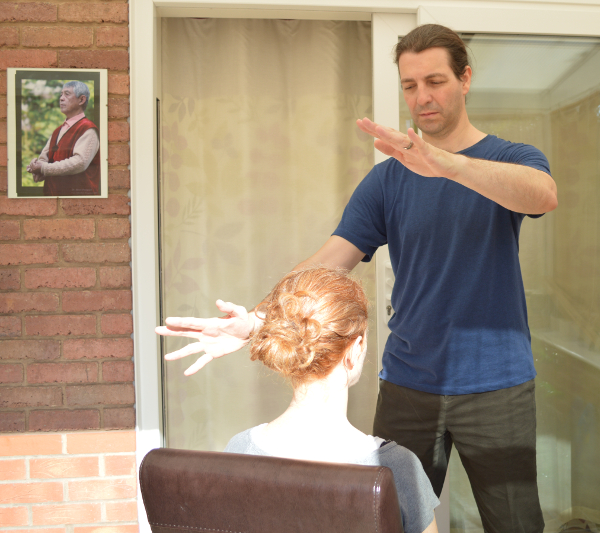
Photographs copyright Nona Huazang Jing She (諾那華藏精舍), reproduced here with thanks.

Tuesday, 8 June 2021

Buqi for Covid-19 Rehabilitation

In the previous article, I gave a brief explanation of the Buqi System: what it is, how it works, what it is useful for, etc.  Covid-19 was unheard of when I wrote that article, and probably didn't exist in humans.  Now it is here with us, many people have had it, and we are beginning to understand the long term effects the virus can have on the body and mind post-recovery: physiological changes to the lungs and other organs, and the ongoing symptoms as a result.

While elements of the Buqi system may have a supportive role during early onset of the viral infection, I suspect its most important and tangible benefits will be in supporting people who have been very ill and recovered from the disease - addressing their recovery from the treatment and any 'long-covid' symptoms.


How Can Buqi Help?

At the beginning of 2021, I did an accredited course in Exercise for Covid Rehabilitation, which was developed by leading medical experts in the field.  I learned many things from this course, but one of the main points was that a carefully managed programme of physical exercise is an important component of the rehabilitation process.  By 'carefully managed', I mean that the client's health and fitness levels must be assessed from the outset and throughout the programme so that it can be finely tuned according to the client's needs, to ensure maximum safety and efficacy.

The course focused on gym-based exercise, but the same protocol could easily be applied to other forms of physical exercise, provided the teacher is suitably trained and qualified in the chosen exercise system and in Exercise for Covid Rehabilitation.  It is clear to me that carefully curated elements from Taiji 37 and Taijiwuxigong could be very effective as a covid rehabilitation exercise programme.


Not Just Physical Exercise

Buqi Therapy also contains exercise components which are generally more gentle than Taijiwuxigong and Taiji 37.  Someone embarking on a Buqi-based rehabilitation programme would probably begin with the exercises from Buqi Therapy, gradually working their way up to Taijiwuxigong and then Taiji 37.

This being the case, why not make use of all the elements of Buqi therapy: diagnosis, treatment, self-healing exercise?  It seems to make perfect sense to me.  This way, we are fulfilling the need for physical exercise as specified by specialist health professionals, and complementing that with all the other benefits that Buqi therapy provides.

Remember that the self-healing exercises are not just ordinary physical exercise, they also include breath work, voice work, and meditation.  These elements can help address other post-covid issues that are not necessarily entirely related to physical inactivity: mental/emotional health issues and breathlessness.

Your Help Needed!

To this end, I am planning a new Buqi for Covid Rehabilitation programme, which I hope to pilot later this summer.  To help me with the development of this, I am running a short survey so that I can fine-tune how it will work.  So, if someone you know has been ill and recovered from Covid-19, I would be grateful if you pass-on this link to the survey.

Hopefully, through this programme, yet more positive change can be brought to the world through the Buqi System.


Friday, 7 June 2019

The Buqi System

Introduction

The Buqi System is the result of the life-work of Dr Shen Hongxun (1939 – 2011).  By way of this article, I would like to pay homage to Dr Shen, who was my Teacher, Master, and friend.  It is presented as a kind of narrative and review article, to provide an accessible introduction to the Buqi System.  It begins with some background details on Dr Shen and his development of the Buqi System, followed by my own story of discovering it.  Then we look at the model of health that is at the core of the Buqi System, followed with a brief tour of the system’s component parts: Taiji 37, Wuxi Meditation, Taijiwuxigong, and Buqi Therapy.

I hope that many readers will find it interesting and perhaps it will even provoke curiosity to give the Buqi System a try for yourselves.


Background

The Buqi System incorporates the Taiji 37 style Taijiquan, Wuxi Meditation, Taijiwuxigong (a complete Qigong system), and Buqi Therapy (a unique system of Qigong Therapy).  It was developed by Dr Shen Hongxun as a result of many years of study and research, a journey he began in the late 1940s when he was a child.  During his childhood, Dr Shen spent a lot of time with his grandfather, Shen Baotai, who encouraged him to practice a Daoist meditation system known as Longmen Wuxigong (Shen 2007a).  Then in 1951, Dr Shen also began studying Taijiquan with his family doctor, Dr Wu Baoyuan (Shen, 2007b).  He quickly graduated to study with Dr Wu's teacher, Professor Yao Huanzhi (sometimes spelled 'Yue Huanzhi' (Dong, 2006)), who was renowned for his skills with Taiji Jin (ie Taiji forces).  Dr Shen continued his studies in Taijiquan, Meditation and Daoyins throughout his life, with a number of key masters, including Tian Zhaoling (Yang family Taijiquan lineage holder (Clark, no date)), Zhou Qianchuan (the E-Mei Daoyin Master (Otehode, 2016)), and Lama Fahai (disciple to Master Huiding and Gongga Khutukutu (Esposito, 2008)).

Professionally, Dr Shen became a doctor, and The Buqi System emerged from his research and development of a universal model of 'health' (body, 'energy-body', mind, spirit).  This model was self-consistent, and it seamlessly integrated Western medical science with knowledge from Traditional Chinese Medicine (TCM), Traditional Tibetan Medicine, Internal Martial Arts, and other sources of knowledge (rather than denying them) – let’s call it 'the Buqi Model of Health'.  In short, this model will make sense to anyone with a Western background who is open-minded enough to consider that there is more to nature than has so far been successfully modelled by Western sciences.
 

As an Engineer and Academic, it was this model (together with the astounding changes and benefits that I experienced through my study and practice of the Buqi System) that hooked me and has kept me hooked ever since I discovered it in 2001.

My Own Discovery of the Buqi System

As a child, I used to love trying to invent sci-fi inspired devices, like time machines, teleporters, and telepathy devices – basically anything that turns something seemingly ‘magic’ into reality.  When I left school, pursuing a career in Electronics/Software Engineering seemed like the natural choice.  However, this has lost its appeal over the years, because it is mainly about building systems rather than any ‘magic’.

In my mid- twenties, I was re-inspired by the possibility of turning magic into reality when my dad tried to heal a patch of eczema on my hand by holding his palm a few inches above it.  While he held his hand over mine, I felt a very strong tingling sensation in my hand, as though an electric current was flowing into it.  This got me thinking.  What was this ‘energy field’ that I felt?  Do I have the same ability, and can I get ‘good’ at it?  What could I use it for? How could I use it to make the world a better place?

I began researching all sorts of leads, reading about the energy body, chakras, inner alchemy, and so on, to find out what path to follow in order to develop this 'latent ability'.  All leads just raised more questions than answers.  All the information in the books, journals, etc, had no consistent model and evidence.  I began to think that if there was anybody in this world with the answers I was looking for, they were keeping them a secret.
 

Around 1997, I had the idea that this ‘energy field’ might be the same as ‘qi’, and I began looking into learning Taijiquan and Qigong.  I tried-out a few teachers before finding my first 'proper' teacher (Paul Brewer) in 2001, who introduced me to the Buqi System and Dr Shen.  What stood out for me was not just the quality of the teaching, but also the quality of the knowledge, which had a consistent theoretical basis and clear practical application.  So, I was already hooked by the time I first met Dr Shen at his annual Wuxi Meditation course in 2003.
 

I learned a great deal through my ongoing study and practise of the Buqi System, and I developed an understanding of this ‘energy field’: that it is essentially the same ‘stuff’ as Taiji Jin.  With the right understanding and development, it can be used for a number of different things, including healing.  However, without that understanding and development, it is likely to be harmful.
 

There is a whole lot more to the Buqi System than just this, but this is how I came to begin following this path.  I now teach Taiji 37, Wuxi Meditation, and Taijiwuxigong in a variety of settings.  I also offer Buqi Therapy treatments for my students and other private clients.

The Buqi Model of Health

To understand how Taiji 37, Wuxi Meditation, Taijiwuxigong, and Buqi Therapy integrate to form the overall Buqi System, we need to consider some key elements of the Buqi Model of Health.  We begin with a look at 'qi' from the Buqi perspective.

A(nother) Definition of Qi

In the West, we normally interpret the term 'qi' to mean something like 'vital energy' or 'life force'.  However, in Chinese, it has many meanings, and evidence of its use dates back at least three thousand years, across China and beyond (Shen, 2007c).  Within the Buqi Model of Health, the meaning of qi tends to be consistent with modern TCM.  In this model, the 'vital energy' referred to above is a specific type of qi, called Yuanqi.
 

Binqi is an important type of qi in The Buqi Model of Health (Shen, 2011), which consists of pathogenic factors resulting from metabolic waste, by-products of emotions, products of bacteria and virus, etc.  Binqi is further categorised in terms of our internal experience of it, particularly when it moves through the (energy-)body, eg: wind-binqi, cold-binqi, hot-binqi, etc.  In practice, we also tend to associate it with other, less subtle substances that it often moves with, eg: blood, lymph, synovial fluid, lactic acid, methane, water, etc.
 

Under normal (healthy) conditions, the amount of binqi present within the body at any point in time is quite low, and it continually flows out of the body via a number of routes.  However, under certain conditions, the body can begin to over-produce binqi, and/or the binqi can accumulate in various parts of the body.  It is this over-production and accumulation of binqi that is linked to a wide range of illnesses, many of which are not yet fully understood by the Western Medical scientific community.
 

One of the key outcomes of Dr Shen's medical research was his discovery of the processes that give rise to the over-production and accumulation of binqi, which he modelled as 'the Double Vicious Circle of Illness' (Shen, 2011).


The Double Vicious Circle of Illness (DVC)

The DVC consists of two interrelated vicious circles: the Vicious Circle of Body Posture and the Vicious Circle of Mental Stress.  The Vicious Circle of Body Posture originated from Dr Shen's research into the use of Qigong to treat myopia, which primarily concerns how binqi accumulates.  It consists of four mutually-dependent stages:
1.    Prolonged poor body posture, resulting in increased physical tension, thus narrowing the spaces between the joints (especially between the vertebrae).
2.    Reduced flow of body fluids, (blood, lymph, cerebrospinal fluid, etc), and hence qi.
3.    Accumulation of binqi in the regions of tension (especially the spine), which causes discomfort/pain (physical stress).
4.    Further contraction of the joints (ie worsened body posture) in response to the discomfort.


Dr Shen later identified the Vicious Circle of Mental Stress, which concerns how binqi is over-produced.  We can similarly break this down into stages:
1.    Mental stress, ie: spending too much time thinking about things that either have happened in the past or might happen in the future, or as a result of various internal or external pressures (ie either from ourselves or others). 
2.    Negative emotions, ie: the sympathetic nervous system (fight/flight) is constantly active, often resulting from mental stress, but can also be due to physical stress.
3.    Over-production of binqi, as a result of an over-active sympathetic nervous system.


These two vicious circles are bound together through an over-active sympathetic nervous system, experienced as a rollercoaster of emotions (ranging from anger to fear, and everything in-between).  The physical response is poor body posture, the mental response is mental stress, resulting in both over-production and accumulation of binqi.
 

Figure 1 - Diagram of the DVC
 
A fundamental aim of the Buqi System then, is to break both sides of the DVC.  A number of the exercises in the Buqi System involve developing and maintaining an appropriate flow of qi throughout the body and meridians/channels, by improving body posture (hence freeing-up blockages), allowing the binqi to freely flow from its sources to key exit points (Shen, 2011).  Other exercises involve developing and maintaining a healthy/balanced mind throughout everyday life, thus minimising the production of binqi.  These goals can be ultimately achieved through regular study and practice of Taiji 37, Taijiwuxigong, and Wuxi Meditation, but they must be applied within all areas of our everyday life for this approach to work properly.


Components of the Buqi System

In this section, we take a brief look at Taiji 37, Wuxi Meditation, Taijiwuxigong, and Buqi Therapy, highlighting their origins and their functions - particularly in how they can work towards breaking the DVC in ourselves and others.  As spontaneous movement crops-up in all of these, we shall begin with a closer look at that.

Spontaneous Movement

Spontaneous movement actually takes place within our bodies all through our life, eg: the heartbeat, blinking, peristalsis, and other, more subtle movement.  These are what we might term 'involuntary' spontaneous movements, as they tend not to require our conscious volition to make them happen.  However, we can voluntarily induce other spontaneous movements in the body, through adopting a particular state of mind, together with specific, finely tuned standing, seated, or lying-down postures, so that the lower dantian (a region in the belly that is enclosed by the deep abdominal muscles) becomes 'activated' (Shen, 2011).  This activation manifests vibrations which, through use of the correct posture and attitude, then travel and resonate throughout the body. Different postures result in different effects, but fundamentally, the vibrations help the qi to flow.

Taiji 37

Dr Shen developed Taiji 37 from a style of Taijiquan whose routes lie in Siming Shan, in Zhejiang province.  This rare style was colloquially known as Siming Pai or Nan Pai (Southern School) Taijiquan.  The Taiji 37 style retains the full 37 postures of Nan Pai Taijiquan, which are practised individually to generate controlled, finely-tuned spontaneous movement (Shen, 2007d).  The Taiji 37 style form consists of these postures strung together in a sequence similar to other short Taijiquan forms.
 

In the early stages (eg 3 years), diligent training in the postures gradually corrects habitual poor posture.  This then results in relief from the associated discomfort of accumulated binqi.  After the practitioner has developed further precision in the postures and movements, controlled spontaneous movements become possible, which contribute to a better flow of binqi out of the body.  Spontaneous movement is also linked to the relatively rapid development of Taiji Jin that students can achieve.  Taiji 37 is therefore a fully functional internal martial art.  However, the Taiji Jin can also be employed for healing oneself and others.

Wuxi Meditation

Wuxi Meditation ultimately develops other latent abilities, through adopting correct body posture and breathing, coupled with meditation exercises from Chan, Tibetan, and Daoist traditions.  Dr Shen found that some of the foundational principles of Taiji 37 (ie posture, breath, movement) were extant in the early forms of these meditation practises, but tended to have lost favour over time.  Placing appropriate emphasis back into these aspects re-invigorated the meditation.
 

The first step in the meditation practise is to find the 'centre of the mind', which can break-through the negative thought patterns of mental stress, and develop a more calm and positive outlook (Shen, 2007f).  Through the calmer mind and correct posture, the sympathetic and parasympathetic nervous systems become more balanced, thus reducing the overall levels of binqi production within the body.  With regular practise, this balance can be maintained and carried into everyday life.

Taijiwuxigong

Taijiwuxigong (Shen, 2011) is a complete Qigong exercise system, which Dr Shen developed through medical research using Taiji 37 and Wuxi Meditation as its basis.  A Taijiwuxigong student would normally begin by learning the 'Wuxi Daoyins', a set of standing exercises that are finely tuned to correct the posture (especially the spine), activate the dantian, and rapidly free-up and expel accumulated binqi. 
 

However, Taijiwuxigong is probably best known for its core practice of free spontaneous movement, through use of the 'Wuxi' standing, sitting, and lying-down postures, (under the close supervision of a qualified teacher).  The 'Wuxi' postures were devised to allow qi to flow freely throughout the body, 'pumped' by the activated dantian.  As the accumulated binqi begins to free-up and flow again, the body begins to self-correct through an evolution of specific spontaneous movements.

Buqi Therapy

The final piece of the system is Buqi Therapy (Shen, 2007e), a complementary therapy in which the practitioner diagnoses and treats clients according to the Buqi Model of Health.  The aim is to break both sides of the double vicious circle, by restoring balance to the nervous system and correcting poor posture.  Diagnosis involves finding any areas of accumulated binqi and understanding its relationship to the client's habitual posture.

The practitioner begins the treatment process by using specific Taiji Jin to clear areas of accumulated binqi.  Gentle exercises are then prescribed, which continue the binqi clearing process, and begin to restore posture and calm the mind.  Buqi therapy is particularly useful for clients who either need some help at the early stages of their self-healing journey (hence Taijiwuxigong would be too strong and/or painful for them), or because of a particularly difficult localised problem that is preventing them from exercising (eg an infection).

Closing Remarks

Students choose the Buqi System for a variety of reasons, from simply improving their health, posture, mobility, and fitness, through to the more esoteric offerings of Taiji Jin, and spiritual development.  Some students study specific components, others choose to learn it all.  As with all exercise systems, it can only really be learned with the guidance of an expert teacher.
 

Shen Jin (Dr Shen’s daughter) and Shen Zhengyu (Dr Shen’s son) are obviously very experienced with this knowledge, having studied it directly with their father most of their lives.  They are both based in Belgium and offer courses throughout Europe.  However, the UK also has a thriving community of excellent teachers, so do look us up if you want to give it a try!

References

Clark, Leroy, and Sun, Key. no date. 'Tian Zhaolin: A Legacy of Yang Taiji'. The Art of Energetics Website. Available online at: http://www.art-of-energetics.com/New/tian_zhaolin.htm (last accessed: 16th January 2019). 
 
Dong, Paul, and Raffill, Thomas. 2006. Empty Force. North Atlantic Books. 

Esposito, Monica. 2008. 'rDzogs chen in China: From Chan to “Tibetan Tantrism” in Fahai Lama’s (1920-1991) Footsteps'. Images of Tibet in the 19th and 20th Centuries. École française d’Extrême-Orient. 

Otehode, Utiraruto, and Penny, Benjamin. 2016. 'Qigong Therapy in 1950s China'. East Asian History, 40, pp69-84. 

Shen, Hongxun. 2007a. 'Longmen Wuxigong'. Taijiwuxigong website. Available online at: https://taijiwuxigong.com/longmen_wuxigong.htm (last accessed: 16th January 2019).  
Shen, Hongxun. 2007b. The Autobiography of Dr Shen Hongxun. Available online at: http://www.shenhongxun.com/biography-01.htm (last accessed: 16th January 2019).

Shen, Hongxun. 2007c. 'Chi'. The BUQI Institute website. Available online at: http://www.buqi.net/en/articles/chi.htm (last accessed: 16th January 2019).
 

Shen, Hongxun. 2007d. 'Standing Postures'. Taiji-37 website. Available online at: http://www.taiji37.com/postures.htm (last accessed: 16th January 2019).
 

Shen, Hongxun. 2007e. 'Buqi Energy Healing'. The BUQI Institute website. Available online at: http://buqi.net/en/systems/buqi.htm (last accessed: 16th January 2019).
 

Shen, Hongxun. 2007f. 'Wuxi Meditation'. The BUQI Institute website. Available online at: http://buqi.net/en/systems/meditation.htm (last accessed: 16th January 2019).
 

Shen, Hongxun. 2011. Spontaneous Movement for Health and Happiness. The BUQI Institute.

Monday, 7 August 2017

Fitness

Fitness with Tai Chi?

We all have our reasons for choosing to learn Tai Chi.  Some people come to my classes because they need to gradually build-up their physical fitness levels as part of recovery from a serious illness.  Taiji37 and Taijiwuxigong is certainly a safe option for doing that, and those that stick at it find that they benefit in so many more ways than just improved physical fitness.

For me, I was already reasonably fit, and I chose to study Tai Chi because I wanted to learn and practice meditation, but I didn't want to forego my weekly fitness exercise regimen. I didn't feel like I had enough time to do both fitness exercise and meditation, so I thought that learning Tai Chi might be a way of doing both at the same time.

Of course, I got more than I bargained for!  Tai Chi brought about transformational changes in me, and I began to understand how health/wellbeing is achieved through fitness of the 'subtle' body, as well as the physical body and mind.

Physical Fitness

OK, but does Tai Chi really work as a means of maintaining good physical fitness? I hear you ask.  Well, yes it does... or at least it can if you do it right.

Think of it this way.  A 'standard' workout at the gym involves a good warm-up, then some stretches, then a cardio-vascular session, then a cool down, then some more stretches.

A good run through of the Taiji37 style form will last about 15-20 minutes and give you the equivalent heart rate of a good warm-up at the gym.  You can then follow that with some Taijiwuxigong exercises to achieve some good stretching.

For the cardiovascular work-out, you can run through the TianShan (Taiji37 long) form, which will take around 45 minutes and can quickly get the heart-rate up to cardiovascular levels if done right.  You could follow this with some more Taijiwuxigong to cool-down and stretch.

The cherry on the cake would be a nice session of Wuxi Meditation afterwards!

Of course, you need to have already learned these exercises ahead of using this regimen.  This would be a considerable time investment, but the excellent physical fitness work-out would be a fraction of the overall benefits from it. 


What About Interval Training?

A few years ago, when I had some spare time, I tried a little toe-dabble in HIIT (High Intensity Interval Training).  I went running in my local forest footpath three lunchtimes a week.  At the start of each run, I jogged for 10 minutes to warm up.  Then after the warm-up, I did three repetitions of 2 minutes 'fast as possible' running / 2 minutes 'warm-up jog' running.  And then I finished off with a cool-down jog and leg stretches.

It was definitely better than a 'standard' run or workout at the gym, but after a week or so, I thought to myself: why not just do this using Taiji37?  So, after a bit of experimentation, I figured-out a good method of doing this.  The method exploited the unique semi-spontaneous movements that are achieved with Taiji37, and it was very effective.

I don't teach 'Tai Chi HIIT' in any public classes, but do get in touch if you're interested in training one-on-one with me in this.


Isn't This Trivialising Tai Chi?

The truth is, learning Taiji37 and Taijiwuxigong for the sole purpose of maintaining 'physical fitness' in the Western sense of the term, will always require more 'effort' than just doing a 'normal' workout.  However, physical fitness is the most basic of the many benefits that learning these systems will bring.  Many practitioners would rightly say that using these systems as a physical 'work-out' is trivialising them.

On the other hand, if your physical fitness levels are poor enough for a 'normal' workout to be impractical, learning Taijiwuxigong and Taiji37 can be a safe and accessible way of building-up your physical fitness levels.  As your strength and energy levels improve, you can then begin to embrace the opportunity to use it in a more planned way to optimise fitness in terms of both your physical and your subtle body.  This is the real power of these exercise systems.
 

Thursday, 27 July 2017

Supporting Your Passion

Your Passion

Perhaps one of the most important things in life is to be passionate about something, as it brings meaning to our lives.  And you may have already guessed that one of my passions in life is 'Tai Chi' (or rather: Taiji 37, Taijiwuxigong, Wuxi Meditation, and Buqi).

But for many diligent Tai Chi practitioners this isn't the case.  They practice the art, not just through the sheer joy of it, but because it supports them in the pursuit of their passions in life.

In my own experience, these passions range from singing, playing musical instruments, and public speaking, through to sporting activities such as Golf, Surfing, Rugby, and even other martial arts like Karate.


How?

To understand how Tai Chi can support these wide ranging pursuits, we need to consider the benefits that these systems provide - see last week's blog post).

For sports activities like Golf, for example, the precise control and engagement of the core, orchestrated with the upper and lower limbs that is achieved through practicing Tai Chi, can bring a whole new dimension to your game.

On the other hand, for musical instruments, the depth of rapport between mind and body, and self-awareness, developed through Tai Chi, can facilitate and enhance a feeling of 'oneness', a deep connection between self and instrument.

I wonder how Tai Chi could take your pursuit of your passions to the next level?

Thursday, 20 July 2017

Why?

Why would you want to study and practice Taijiwuxigong, Taiji37, and Wuxi Meditation?

People study and practice these systems for a variety of reasons.  Typically, these reasons include improving physical, emotional, and/or mental fitness and wellbeing

This is a very broad and sweeping statement, so here are some examples of specific benefits...

Sport & Physical Activity

The more active elements of these systems facilitate improved:
  • Posture
  • Grounding, resulting in a centred and stable stance
  • Core Strength and Flexibility, resulting in more balanced and deliberate movements
  • Yielding, resulting in greater resilience against tackles and attacks
  • Proprioception, allowing you to move your body with more timeliness and precision
  • Orchestration of the whole body in any movements made
  • ...

Artistic Expression

All aspects of the systems promote:
  • Deepened self-awareness, hence better self-expression
  • Improved breath and voice control, hence stronger, more precise singing voice
  • Better physical expression, through the deepened rapport with self, and all points for 'Sport' above.

Health

All aspects of these systems promote:
  • Wellbeing: developing and maintaining personal strength in mind and physical body, helping you to cope better with causes of anxiety and stress.
  • Recovery: from disease, medical treatment, and loss.
  • Self-defense: protection from attack by other humans, animals, and other elements of the environment.

Maybe I'll explore some of these points in more detail in later posts...


Monday, 18 November 2013

Partner Exercises in Taijiquan

In the last post, we looked at a well-known secret on the easy way of getting good at taiji.  However, there is also a not-so well-known secret that sits alongside it.  And that secret is that a large proportion of taiji practice involves working with a partner.

Why Partner Work Is Important
You may recall from an earlier post, that our internal movement in taiji is expelling bad stuff (binqi) and bringing-in new good stuff.  This action originates in the martial art of taijiquan.  We neutralise our opponent's attacks by taking their force through our body and either sending it away or giving it back to our opponent.  This isn't a trick you can learn overnight.  It requires practice of the quality I described in last week's notes.

You need to explore what it feels like to become a conduit of an opponent's energy, to conduct and send that energy away, or to fold it back into the opponent.  Through this exploration, you gradually become adept at doing it correctly without conscious effort.  And by doing this, you become adept at the internal movement of taiji.

Partner Exercises
Perhaps the most well-known partner exercise in taiji is 'tui shou' (pushing hands).  This is a fairly sophisticated, structured sparring exercise, where the partners are trying to cause one another to lose balance.  Other, even more sophisticated sparring exercises, are 'da lu' and 'san shou', which also incorporate foot work.  The only way to learn these things properly is through instruction and practice.

However, before we get to these partner forms in our classes, we need to spend some time learning some of the principles employed.  We do this using 'sticking hands', 'two-handed yielding', and a basic form of 'ba gua'.

In practising sticking hands, we are learning to generally perceive our partner - their position, movements, energy - without using our eyes.  Not only that, but we are learning to trust our perception.  This is the beginning of our understanding of how to sense subtle movements and changes in our external environment.

In two-handed yielding, we up the ante slightly.  In this exercise, we have a defender and an attacker.  As the defender, we are learning to hide our centre of gravity, or 'root'.  As the 'attacker', we are learning how to seek-out our partner's root, and thus cause them to lose their balance.

These exercises can really only be learned through live teaching, and they will are gradually introduced to students as they become more comfortable with the basic solo work.


Tuesday, 15 October 2013

Some Notes on Movement

Movement

In the previous article, we considered how one of the foundations of taiji is expansion. This expansion provides us with a good infrastructure for movement - a movement that flows from within. Think of it like plumbing. By expanding the joints, we are opening the valves and turning on the taps. Our aim then is to make 'qi' flow through the pipes. To do this, our 'qi' has to be pumped from somewhere and must travel to somewhere.

What is this qi?

I think that a particularly good translation of the word 'qi', is 'stuff'. Qi refers to all sorts of things, the most tangible being bodily matter (solids, fluids, and gases), such as metabolic by-products, blood, synaptic fluid, air, methane, etc. Stuff. 

The exercises we study and practice in taiji get rid of 'binqi' - bad stuff. Things like lactic acid in the muscles, ammonium chloride in the joints, calcifications, stagnant joint fluid, puss, methane, and the like. Stuff that we would rather not have inside us, but nevertheless is present either because we put it there, or because it is produced by natural body processes. 

It is reasonable to assume that there is an abundance of good stuff around us; fresh water, fresh air, fresh food, etc. So in taiji, we adopt the same strategy as breathing, eating, and drinking - we send out the stuff we have used and no longer need, which in so doing, causes a whole load of new, fresh stuff to flow in. And then we repeat ad infinitum. 

So our internal movement within our plumbing system is always in an outward direction, sending all of the qi away. 


The Destination

We control where we send the stuff away to with our mind. We do this by thinking and focusing on the place we want our stuff to go to. It doesn't necessarily matter where that destination is, provided it isn't a person. Rather we choose our destination based on its distance (the further the better), the direction (the direction we want our qi to flow in), and how well we know the place (obviously it is easier to think of and focus on somewhere we know well). 


The Pump

In order for the stuff to actually move through our newly opened plumbing system, it needs to be pumped. This is done by the 'lower dantian'. The lower dantian is a region in the abdomen, centrally located about halfway between the navel and genitals, and about a third of the way inside, in between the abdominal muscles. 

The lower dantian is activated with certain exercises that I will be teaching in my classes. When it is activated, the lower dantian pumps qi through the body when we make all body movement originate from it. This process is easier to understand by demonstration and practice than by reading. 

However, I really want to emphasise that making ALL body movement originate in the dantian, resulting in a flowing, joined-up movement, is the foundation to this process. If you are not doing this, then you are not doing taiji. 

Come along to a class and try it out for yourself!

Wednesday, 9 October 2013

What's It Like Coming To Your First Class

Coming to Your First Class

New students turning up to their first taiji class often don't know exactly what to expect. So, if you decide to come to one of our classes, then the following might give you some insights.

What is important?

Taijiquan is called an 'internal' martial art for good reason, because it is primarily about what is happening on the inside of the body. Our aim is not to perfect the external manifestation of a taijiquan form, but rather to perfect the necessary internal structure and movements in manifesting any and all of our external movements. We use taijiquan form as a means of studying and practicing this. 

Taijiquan form is important, but there are some even more important fundamentals that need to be covered before and during our study of taijiquan form. 


Expansion

Taiji is all about expansion, rather than relaxation. Expansion is fundamental to taiji. For example, we endeavour to expand our joints, creating space between them. 

We begin our studies by focusing on expanding the biggest joints - our hips, shoulders, and spines. It might be debatable whether our spines are joints, but for our purposes we can think of them as a string of joints running from the coccyx to the base of the skull. We find that muscles around these joints are prone to a lot of physical tension, due to lifestyle habits, negative emotions, and other forms of stress, which in turn cause the joints to contract. 

Many of the exercises that we do are intended to work on these joints; firstly to loosen them, and then to gently expand them. Taijiwuxigong exercises are particularly helpful in achieving this. Each week we spend time doing these exercises, gradually improving our understanding of how we make expansion happen and how it feels. We also apply this fundamental knowledge each week in a step-by-step study of the taijiquan form known as Taiji37 form


Benefits

The upshot of this is that studying and practicing taiji provides relief from the physical effects of long term stress. Come along and find out for yourself - the more you do it, the better it works.

Tuesday, 8 October 2013

How To Become Good At Taiji


How to Become Good at Taiji

In the previous article, we considered what the word 'movement' really means in taiji and how it is done. You will recall that the concept is profoundly simple, yet putting it into practice is far from straightforward. This is mainly because it requires us to re-learn some fundamental aspects of movement, things we originally learned as young children. 

Clearly, movement is pretty fundamental to taiji, in fact it is fundamental to everything we do in life, even sleep. So as a newbie to taiji, it might not be such an attractive prospect to discover that much of the initial work is about learning to move (also breathe, think, and sense) differently than how you do in everyday life. To alleviate this, I am going to let you into a secret: the easy way to become good at taiji.

The Easy Way

This easy method is so simple that you will probably have to read it twice to notice what it is. In fact the philosophy of it is contained within that sentence. 

Much of the effort in bodywork is in development of proprioception - knowing what it feels like to move and position very specific parts of your body in very specific places. To truly know, you have to explore and to question: what am I doing now? where am I now? where do I need to be? how do I need to move to get to where I need to be? what does it feel like when I am there? 

And that last question is probably the most important: how does it feel? Essentially, it is an act of introspection. What is important is this exploratory process, not how long it takes, or how successful you are. Focus on the exploration. ENJOY it and have FUN with it. 

When you go to your next taiji class, use your taiji teacher as a talking mirror. Really apply the feedback you get, really enjoy it and remember what it feels like when you know you are closer to getting it right. Take that knowledge with you and apply it to everything you do. Re-tune your perception of taiji into a philosophy of movement that you apply to everything you do. That way, you can enjoy it so much more because you will have so many more opportunities to explore. 

During those moments of your life where you are doing relatively little movement - perhaps you are watching TV or listening to the radio, or even just boiling the kettle - remember what you learned in taiji class last time. Play with it, explore it, and enjoy it. It need not take more than five minutes, but oh, what five minutes of joy! 

So, when you go along to your next class and try it out for yourself, you will probably already begin to notice how much easier it is. 

Tuesday, 1 October 2013

What Is Tai Chi, etc?

Tai Chi, etc is all about Taijiquan, Qigong, Meditation, and Qigong Therapy/Healing.

But what Is Tai Chi?

Tai chi is actually the name of the yin-yang philosophy, on which many volumes have been written.  On the other hand, the 'Tai Chi' that many people around the world learn and practice (including me!) is a traditional Chinese martial art, more correctly called 'Taijiquan' or  'Tai chi chuan' - both transliterations being of the same Chinese name. People tend to just call it 'Taiji' (Tai Chi), however, the 'quan' ('chuan') part is important: it means boxing or martial art, which is what Taijiquan is, and it differentiates Taijiquan from the philosophy.

When Taijiquan was first brought to the West (by Cheng Man Ching), its common English translation was 'Grand Ultimate Fist' - the 'Fist' part coming from 'quan', and 'Grand Ultimate' coming from 'Taiji'.  However, while this perhaps satisfies the need for a name, it doesn't really provide an effective translation.  We have already seen that 'quan' actually means boxing/martial art, whereas, the use of the term 'Taiji' is making reference to the philosophy, because the Taiji philosophy was traditionally used in the teaching of Taijiquan.

As a philosophy, Taiji actually refers to 'the universe and everything in it'. So, a direct translation of Taijiquan would be: 'the universe and everything in it boxing', which does not quite roll off the tongue so well, but in any case, it gives us little clue about what Taijiquan really is.  In the end, it is better just to refer to it as 'Taijiquan'.

Perhaps a more useful and informative translation of 'Taiji' might be: 'unlimited size', as this refers to a fundamental principle of Taijiquan: expansion. On the physical level, expansion is the practice of stretching and expanding your joints, and creating space between them. Practitioners begin their studies by focusing on expanding the biggest joints: hips, shoulders, and spines.

We find that muscles around these joints are prone to a lot of physical tension, due to lifestyle habits, negative emotions, and other forms of stress, which in turn cause the joints to contract, physically 'holding-in' the pain.  Later, we move-on to include the smaller joints such as in the fingers. By studying and practicing Taijiquan, we gradually improve our understanding of how we make physical expansion happen and how it feels. This is why studying Taijiquan provides relief from the physical effects of long term stress.

However, ‘expansion’ is a fundamental principle of Taijiquan for somewhat more profound reasons than this.

What is Qigong?

Qigong, on the other hand, refers to any exercises that work on the flow of 'Qi' within the body, for health (self-healing) and spiritual development.  The word was first coined many years ago in an obscure Chinese manuscript, and it was later popularised in the 1950s as a catch-all term for a wide range of exercise systems (old and new).  This includes rare exercise systems as well as the more well-known ones, suchas YiJin Jing daoyin and BaduanJin daoyin.  Arguably, Taijiquan solo practice can be considered as a Qigong as well - the 'expansion' facilitates the flow of 'Qi' within (and out of) the body.

The Qigong in Tai Chi etc classes is primarily the Taijiwuxigong system, with a sprinkling of exercises from the YiJin Jing and the E-Mei Shi Er Zhuang.  These systems work to support the Taiji 37 style Taijiquan that we teach (and vice versa).

 What about Meditation?

Within many of the more interesting and useful Qigong exercise systems, there is a strong element of Meditation.  Firstly, some of the deeper Qigong exercises involve deliberately shifting into a Meditational state as a part of the exercise.  Secondly, Meditational states can spontaneously 'emerge' for the practitioner as a result (and in the moment) of the Qigong exercises.  And thirdly, the later-stage exercises of some of the more profound Qigong systems are specific Meditation practices, which work on control and movement of Qi through the subtle body using mind, breath, sound, and internal movement (eg: Taijiwuxigong has 'Wuxi' Meditation and the E-Mei Shi Er Zhuang has 'Ming Zhi Zhuang' Meditation).

Qigong Therapy/Healing

After some years of practicing Taijiquan, Qigong, and Meditation, we can develop latent skills that can be used to help others to 'move their Qi' within their subtle bodies.  You will find that any good teacher will begin to do this with you after you become an established student of theirs.  However, this practice is also used as a complementary threapy, to help people who are too unwell to engage with Qigong exercises at all (and hence unable to begin the self-healing process unaided).

I offer one-to-one treatments using the Buqi system of Qigong Therapy.  I have used Buqi to support a number of people with various health issues, including somatic problems, spirit problems, eczema/asthma, depression, osteoarthritis, cancer treatment recovery, etc, often with marked improvements to quality of life.

Tai Chi etc

Taijiquan, Qigong, Qigong Therapy, and Meditation are actually all interrelated and inseperable.  So, this is why I call what I do 'Tai Chi etc'.